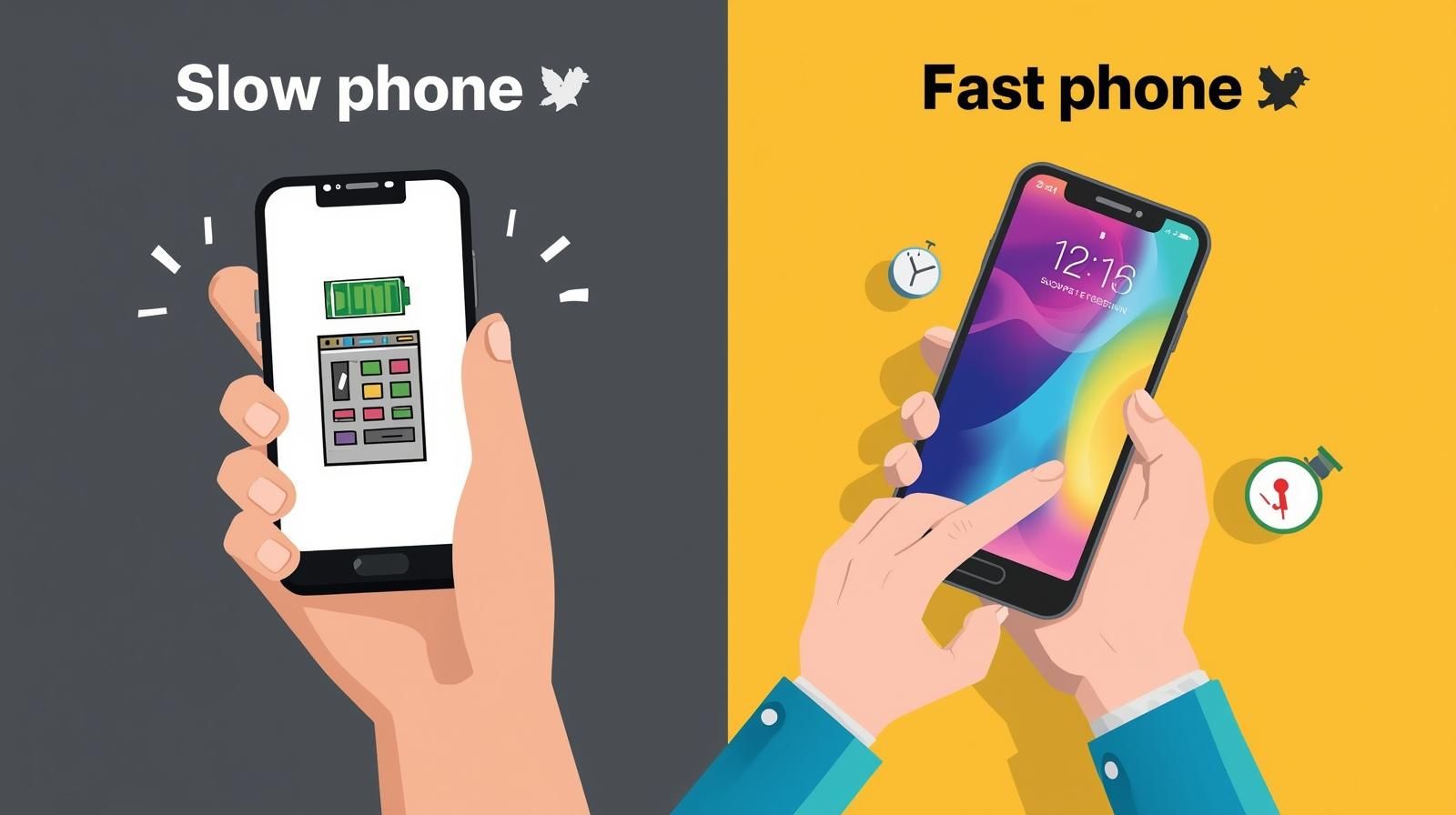
If your Android phone feels slower than it used to, you’re not alone. Apps take longer to open, scrolling feels laggy, and sometimes the phone freezes for no obvious reason. The good news? In most cases, you don’t need a new phone to fix this.
I’ve personally tested these methods on budget phones, mid-range devices, and even older flagship Androids, and the difference can be very noticeable if you follow the steps correctly.
In this guide, I’ll show you practical, proven ways to speed up a slow Android phone in 2026, without risky apps or complicated tweaks.
Why Android Phones Become Slow Over Time
Before fixing the problem, it helps to understand why it happens. Android phones usually slow down because of:
* Too many apps running in the background
* Low storage space
* Outdated software
* Heavy animations and visual effects
* Cache buildup from apps
* Malware or poorly optimized apps
The solution isn’t one single trick, it’s a combination of small optimizations that add up.
1. Restart Your Phone (Yes, It Actually Helps)
It sounds simple, but restarting your phone clears temporary memory (RAM) and stops background processes that shouldn’t be running.
Do this at least once a week, especially if:
Your phone stays on for weeks
Apps crash randomly
The phone heats up easily

2. Free Up Storage Space (Very Important)
When your phone storage is almost full, Android slows down dramatically.
Check your storage:
Go to Settings → Storage
If you’re below 20% free space, performance will suffer
What to delete safely:
– Old photos and videos (back them up to Google Photos)
– Unused apps
– Large files in the *Downloads* folder
– Cached data from apps like Instagram, TikTok, Chrome

3. Clear App Cache (Without Losing Data)
Cache files help apps load faster, but over time they become bloated and buggy.
How to clear cache:
1. Go to Settings → Apps
2. Select an app
3. Tap Storage
4. Tap Clear Cache (NOT Clear Data)
Do not clear cache for:
Banking apps
Authentication apps (unless needed)

4. Remove or Disable Unused Apps
Even if you don’t open them, many apps:
Run in the background
Send notifications
Use memory and battery
What to do:
– Uninstall apps you don’t use
– Disable pre-installed apps you can’t uninstall
Settings → Apps → Disable

5. Reduce Animations (Huge Speed Boost)
This is one of the most effective tricks and doesn’t require root.
Enable Developer Options:
1. Go to Settings → About Phone
2. Tap Build Number 7 times
3. Go back → Developer Options
Change these settings:
Window animation scale → 0.5x
Transition animation scale → 0.5x
Animator duration scale → 0.5x
Or turn them off completely for maximum speed.

6. Update Your Phone (But Be Smart About It)
Software updates often include:
– Bug fixes
– Performance improvements
– Security patches
Go to Settings → Software Update and install available updates.
However:
Very old phones may slow down after major Android upgrades
If your phone struggles after an update, focus on clearing cache and storage
7. Use Lite Versions of Apps
Heavy apps are a major reason phones feel slow.
Try Lite alternatives:
– Facebook Lite
– Messenger Lite
– YouTube Lite or browser version
– Gmail Go
These apps:
Use less RAM
Load faster
Consume less battery
8. Check for Malware or Bad Apps
Some apps look harmless but:
Show ads in the background
Slow your phone
Drain battery
Signs of malware:
Sudden pop-up ads
Phone gets hot when idle
Battery drains fast
What to do:
Uninstall recently installed suspicious apps
Use Google Play Protect
Avoid “RAM booster” or “speed booster” apps (most are scams)
9. Turn Off Unnecessary Background Features
Disable features you don’t actively use:
Bluetooth
Location services
Nearby device scanning
Auto-sync for apps you don’t need synced
Go to Settings → Privacy / Location / Accounts and adjust manually.

10. Use a Lightweight Launcher
Some default launchers are heavy and slow.
Popular lightweight launchers:
Nova Launcher
Lawnchair
Smart Launcher
Benefits:
Faster app opening
Less lag
Better customization
11. Factory Reset (Last Resort)
If nothing works and your phone is still slow, a factory reset can make it feel new again.
Before resetting:
Back up photos and contacts
Sync Google account
Note important apps
How to reset:
Settings → System → Reset → Factory Data Reset
Only do this if:
Phone is extremely slow
You’ve tried all steps above
Common Myths About Speeding Up Android Phones That Are False.
Task killer apps speed up phones
RAM booster apps help performance
Closing apps constantly saves battery
Android already manages memory efficiently. Manual “boosters” usually make things worse.
How Often Should You Maintain Your Phone?
Weekly
Restart phone
Clear heavy app cache
Monthly
Check storage
Remove unused apps
Every 6 months
Review permissions
Clean downloads folder
Final Thoughts: Do You Need a New Phone?
In most cases, no.
If your phone:
Has at least 4GB RAM
Isn’t physically damaged
Still receives updates
Then these steps can significantly improve performance.
Conclusion
A slow Android phone doesn’t mean it’s useless. With a few smart adjustments like freeing storage, reducing animations, managing apps, and avoiding shady “booster” apps, you can restore speed and extend your phone’s life.
If you found this guide helpful, check out our other Android tutorials on fixyorio.com, where we break down tech problems into simple, real-world solutions.